Ingredients: Spearmint, Turmeric Powder, Slippery Elm Powder, Ginger Root, Chamomile Flowers, Lavender Flowers, Marshmallow Leaves.
Soothing inflammation and gut irritation: Herbs with anti-inflammatory compounds (e.g., chamomile, turmeric/curcumin, slippery elm) may reduce intestinal inflammation or soothe irritated mucosa when used as gentle teas or demulcent preparations.
Easing pain and cramping: Antispasmodic herbs such as peppermint and ginger can help relieve abdominal cramping and gas in some people. Peppermint tea or small amounts of peppermint oil (enteric-coated capsules are safer orally) are commonly used for digestive discomfort.
Supporting digestion and nausea control: Ginger tea is well-known for reducing nausea and improving digestive comfort. Fennel and lemon balm teas can also aid digestion and reduce bloating.
Promoting mucosal healing and barrier support: Demulcent herbs like slippery elm and marshmallow root create a soothing mucilage that may protect and coat the gut lining, which can feel comforting during flares.
Reducing stress and improving sleep: Chronic stress can worsen Crohn’s symptoms. Calming teas such as chamomile, lemon balm, and lavender can support relaxation and better sleep, which indirectly helps disease management.
Common herbal options and typical uses
Chamomile tea: anti-inflammatory, calming; good for sleep and mild gut irritation.
Ginger tea: reduces nausea and helps motility; warms and soothes the stomach.
Turmeric (curcumin) tea or supplements: anti-inflammatory; may help reduce systemic inflammation but often requires standardized extracts for meaningful effect. Discuss dosing with your clinician.
Slippery elm and marshmallow root (tea or powder): demulcent—forms a soothing coating over the mucosa. Often used during flare-ups for symptomatic relief.
Safety, interactions, and when to avoid
Talk with your gastroenterologist or pharmacist before starting any herbal remedy. Herbs can interact with Crohn’s medications (e.g., immunosuppressants, biologics, corticosteroids) and with blood thinners or other prescriptions.
Avoid strong stimulatory herbs (senna, large doses of cascara) during active disease flares unless directed by a clinician—these can worsen cramping or cause dehydration.
Pregnant or breastfeeding people should consult their provider before using many herbs.
Bottom line Herbal teas and infused oils can provide symptomatic relief—soothing inflammation, easing cramping, reducing nausea, and helping skin irritation—for people with Crohn’s disease when used
Spearmint and ginger gently ease stomach discomfort and nausea.
Slippery elm and marshmallow coat and soothe the digestive tract.
Turmeric provides anti-inflammatory and antioxidant benefits.
Chamomile and lavender encourage restful sleep and reduce stress.
Ingredients: Spearmint, Turmeric Powder, Slippery Elm Powder, Ginger Root, Chamomile Flowers, Lavender Flowers, Marshmallow Leaves.
Soothing inflammation and gut irritation: Herbs with anti-inflammatory compounds (e.g., chamomile, turmeric/curcumin, slippery elm) may reduce intestinal inflammation or soothe irritated mucosa when used as gentle teas or demulcent preparations.
Easing pain and cramping: Antispasmodic herbs such as peppermint and ginger can help relieve abdominal cramping and gas in some people. Peppermint tea or small amounts of peppermint oil (enteric-coated capsules are safer orally) are commonly used for digestive discomfort.
Supporting digestion and nausea control: Ginger tea is well-known for reducing nausea and improving digestive comfort. Fennel and lemon balm teas can also aid digestion and reduce bloating.
Promoting mucosal healing and barrier support: Demulcent herbs like slippery elm and marshmallow root create a soothing mucilage that may protect and coat the gut lining, which can feel comforting during flares.
Reducing stress and improving sleep: Chronic stress can worsen Crohn’s symptoms. Calming teas such as chamomile, lemon balm, and lavender can support relaxation and better sleep, which indirectly helps disease management.
Common herbal options and typical uses
Chamomile tea: anti-inflammatory, calming; good for sleep and mild gut irritation.
Ginger tea: reduces nausea and helps motility; warms and soothes the stomach.
Turmeric (curcumin) tea or supplements: anti-inflammatory; may help reduce systemic inflammation but often requires standardized extracts for meaningful effect. Discuss dosing with your clinician.
Slippery elm and marshmallow root (tea or powder): demulcent—forms a soothing coating over the mucosa. Often used during flare-ups for symptomatic relief.
Safety, interactions, and when to avoid
Talk with your gastroenterologist or pharmacist before starting any herbal remedy. Herbs can interact with Crohn’s medications (e.g., immunosuppressants, biologics, corticosteroids) and with blood thinners or other prescriptions.
Avoid strong stimulatory herbs (senna, large doses of cascara) during active disease flares unless directed by a clinician—these can worsen cramping or cause dehydration.
Pregnant or breastfeeding people should consult their provider before using many herbs.
Bottom line Herbal teas and infused oils can provide symptomatic relief—soothing inflammation, easing cramping, reducing nausea, and helping skin irritation—for people with Crohn’s disease when used
Spearmint and ginger gently ease stomach discomfort and nausea.
Slippery elm and marshmallow coat and soothe the digestive tract.
Turmeric provides anti-inflammatory and antioxidant benefits.
Chamomile and lavender encourage restful sleep and reduce stress.


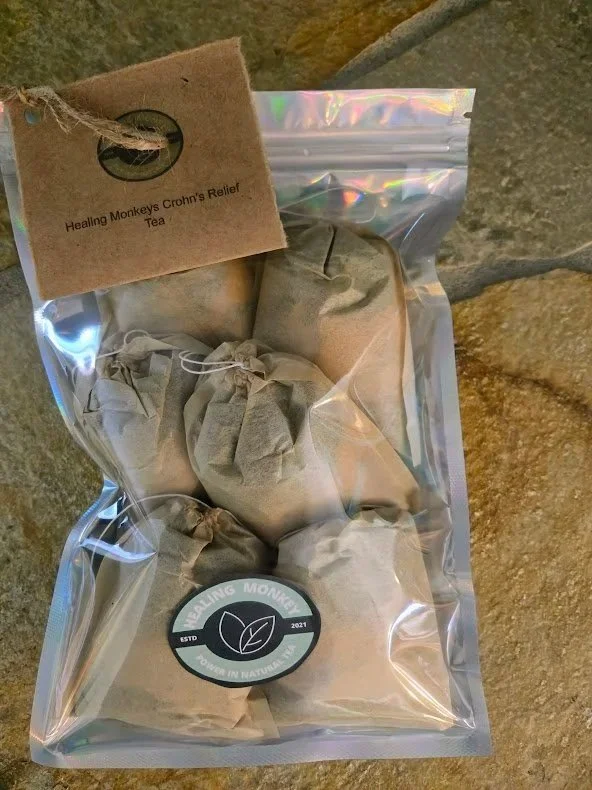 Image 1 of 1